Most people first notice the land around Grand Junction. Red rock canyons line the valley’s western rim. To the north stand the Book Cliffs, while Grand Mesa fills the eastern sky. The city grew where the Gunnison River meets the Colorado, a confluence that explains half of Grand Junction’s name.
Scenery gets people here. The attractions give them reasons to add a day or two, from Main Street’s sculptures to Palisade’s wineries and Fruita’s fossils.
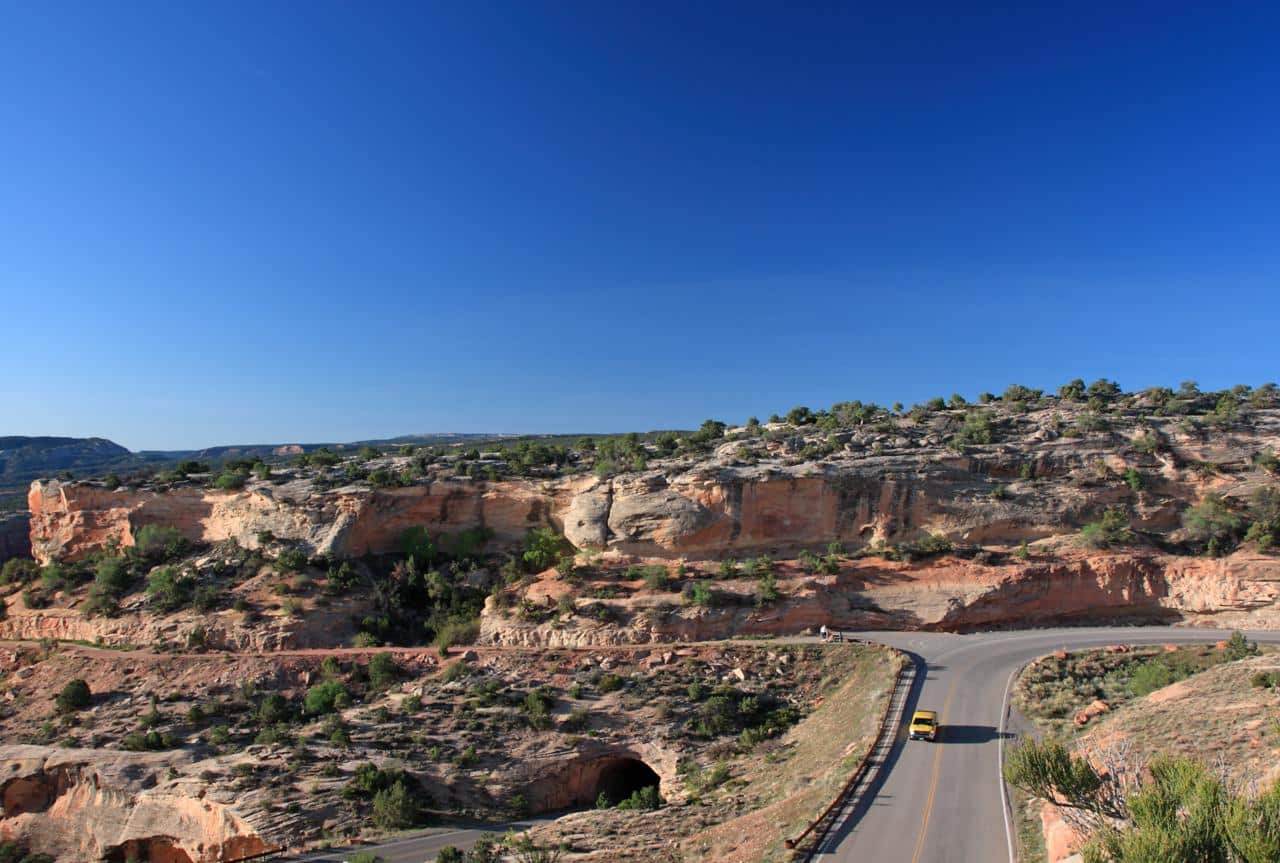
Sandstone walls rise from the valley floor just beyond the river, southwest of downtown. They belong to Colorado National Monument, where Historic Rim Rock Drive winds 23 miles between the Grand Junction and Fruita entrances. Posted speeds generally run 25 to 35 mph. Roadside pullouts lead to overlooks along the way. The Grand Junction entrance is roughly 15 minutes from the city’s regional airport.
With stops, the park service suggests two to four hours for Rim Rock Drive, which makes the monument a half-day outing. Hikers get 45 miles of trails, though the best views start close to the car. The level, half-mile Canyon Rim Trail begins behind the visitor center and suits kids well. Pets cannot go on any monument trail. Campers find year-round sites in Loop B of Saddlehorn Campground. Bighorn sheep sometimes appear near the road, while eagles may pass overhead.
The monument’s best-known story centers on Independence Monument, a 450-foot tower at the heart of Monument Canyon. John Otto, the trail builder who pushed for the park’s protection, drilled holes in the sandstone and hammered in iron pipes to reach the summit. Once on top, he planted a flag. Every Fourth of July, the Mesa County Technical Rescue Team carries on that tradition. Otto later served as the monument’s first custodian, earning $1 a month.
Check these details ahead of the drive:
For a cooler escape, the Grand Mesa Scenic and Historic Byway climbs 63 miles across what many sources call the world’s largest flat-top mountain. The full drive takes about two hours. The mesa averages about 10,000 feet and reaches 11,000 feet in places. More than 300 lakes dot its aspen and pine forest. A seasonal road reaches Land’s End Overlook, which sits some 6,000 feet above the valley. In winter, Powderhorn Mountain Resort draws skiers to the mesa’s northern edge.
Wild horses roam 36,113 acres of canyons and plateaus north of Palisade, inside the Little Book Cliffs Wild Horse Range. It is one of only three U.S. ranges that the government set aside specifically for wild horses. Nine trails cross the range, open to people on foot or on horseback.
Main Street doubles as a free outdoor sculpture gallery. Sculptor Dave Davis launched Art on the Corner in 1984 with 24 pieces. He hoped to bring life back downtown after Exxon pulled out of the local oil shale business. Today the collection counts over 100 works, with new pieces rotating in annually. Look for Greg La Rex, a steel dinosaur skeleton riding a bicycle, plus a bronze pig named Sir.
Two blocks south of Main Street, The Museum of the West at 462 Ute Avenue covers the region’s history. Exhibits range from Ute and Fremont rock art to a 1958 Cessna. The galleries open Tuesday through Saturday from 10 a.m. to 4 p.m., while the Sterling Smith Observation Tower admits visitors until 3:30 p.m. Admission costs $11 for adults, $9 for seniors, and $7 for children.
Restored shoreline covers 130 acres at Las Colonias Park, near downtown and just upstream from the confluence. Summer concerts fill its amphitheater. The park also gives paddlers direct water access. From there, the Riverfront Trail system continues toward Fruita and Loma, although some stretches rely on street or sidewalk connections.
Vineyards begin just east of the city in Palisade, part of the Grand Valley AVA since 1991. Over 30 wineries and tasting rooms operate in town and along the Fruit and Wine Byway. Colorado Cellars claims the title of the state’s oldest operating winery. It opened in 1978 as Colorado Mountain Vineyards and took on its current identity in 1986.
A visit to Palisade can mix several pleasures:
About 10 miles west of Grand Junction, Fruita has a dinosaur museum and several fossil hills close by. Real fossils, cast skeletons, and robotic dinosaurs fill the Dinosaur Journey museum, where visitors watch staff prepare bones in a working lab.
Families will find plenty of hands-on options:
Colorado changed the river’s name in 1921. On July 25 of that year, Congress formally approved calling the former Grand River the Colorado in both Colorado and Utah. Congressman Edward Taylor of Glenwood Springs led the push for the change.
The old name never fully disappeared, though. It survives in Grand Junction, Grand Valley, and Grand Mesa, a visible link to the river that carved this corner of the state.