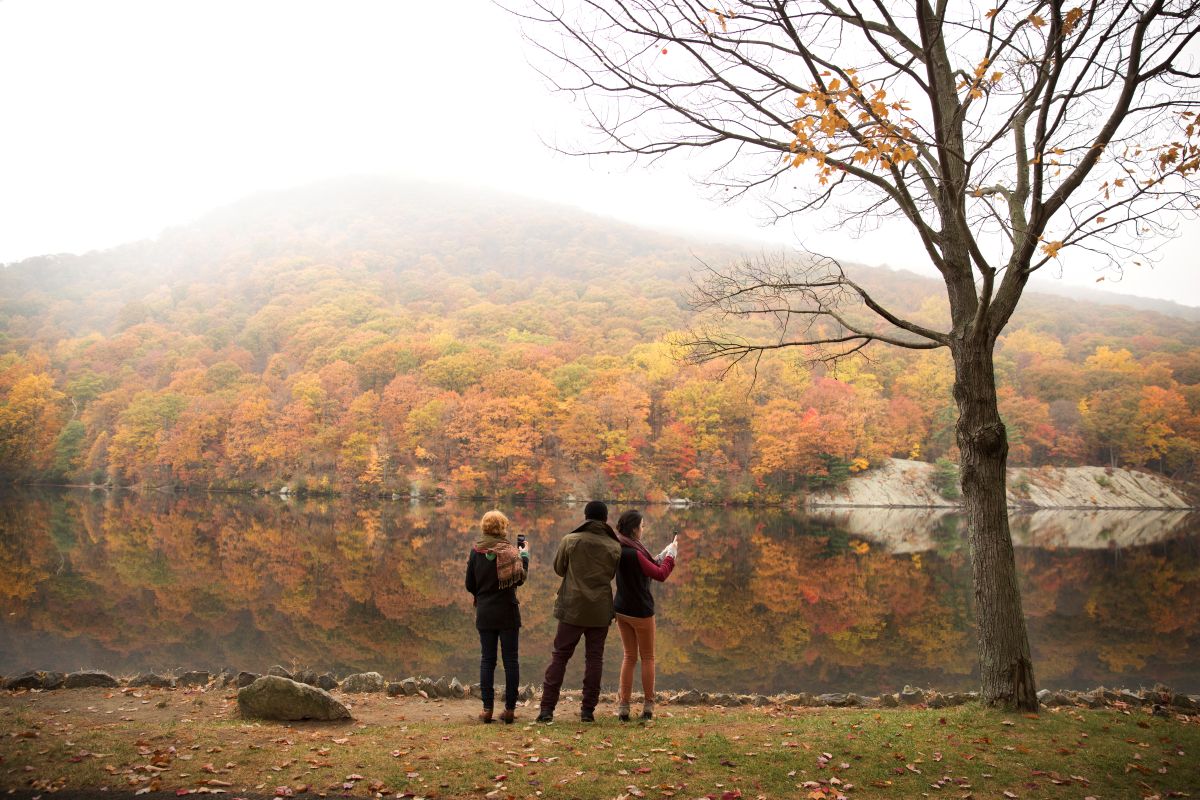
Each fall, the groves around Aspen turn gold for only a few weeks, and when you visit decides how much color you see. Peak timing for Aspen fall foliage shifts earlier or later each year, so a little checking pays off if you want the Aspen fall colors at their fullest.
Most years, the best time to see fall colors in Aspen runs from late September into October, when days shorten and nights turn cold. Groves on the high mountainsides turn first, in September, and the color moves down toward the valley floor over the following weeks.
Weather can move those dates earlier or later:
After a grove reaches full color, most of its leaves fall within a week or two. Calm, cool, dry days extend that period, and wind or a wet storm can shorten it.
Conditions change week to week, so check an Aspen foliage report before you go. The Colorado State Forest Service shares a map of typical aspen color timing across the state, which gives you a starting point.
A set of live mountain webcams and local weather links shows the slopes above Aspen, Highlands, Buttermilk, and Snowmass in real time.
Through the summer, aspen leaves contain green chlorophyll and yellow carotenoids, the same pigment family that colors carrots. As days shorten and nights cool, the tree stops making chlorophyll and pulls nutrients back into its trunk and roots. As the green fades, the carotenoids become visible.
Aspens rely mostly on those yellow pigments, so gold is the usual color, though some stands show orange or red tints. Weather changes how bright the gold looks and how long it lasts.
These three routes go through the groves, and each matches a different fitness level:
Cathedral Lake is best at the start of the season, and the riverside route is best at the end.
Hunter Creek and Cathedral Lake also work as summer hikes, and the climb to the lake suits hikers who have adjusted to the altitude.
The town sits at about 8,000 feet, so weather changes fast, especially in October. Average highs fall from about 59°F in early October to 46°F by month’s end, and average lows drop from about 32°F to 23°F. Snow can fall at any time.
Dress in layers, wear waterproof shoes on the trails, and bring a warm jacket for early starts.
The trailheads sit in several directions from town. The East of Aspen Trail starts in town near the Ute Trailhead off Ute Avenue. Hunter Creek has an upper trailhead a few minutes from downtown, reached from Red Mountain via Hunter Creek Drive. The Cathedral Lake trailhead sits about 12 miles up Castle Creek Road, and the last half mile is a rough dirt road that slows most cars. The road to the Cathedral Lake trailhead also leads to a cookhouse on Castle Creek Road, about 12 miles from town.
That road turns slick after rain, so many prefer to let someone else drive. When a group visits several trailheads in one day, private transportation lets everyone share one vehicle.
Yes. Groves cover the slopes around town, so you can see fall colors in Aspen, Colorado from downtown and the river path without hiking. A hike takes you into the groves, where you see the leaves up close.
Each grove is usually a single colony of genetically identical trees, so the whole stand changes together. A neighboring colony has different genes and can change earlier or later.
Check the webcams the morning you go, pick the trail that fits the day’s conditions, and start early, since the best light and the quietest trails come before midday.