Aspen earns its reputation at altitude. The skiing is world-class, the dining is serious, and the hotels carry genuine weight. But the hours between the mountain and the dinner table, that the pause between one world-class experience and the next, belong to a different category entirely: the boutiques that define luxury shopping in Aspen, and the wellness destinations where clients recover, reset, and arrive renewed for whatever comes next.
Not every option is worth your time, whether you are looking for a spa in Aspen or a boutique that offers more than a hotel lobby. Every business on this list carries a distinct identity, a specific clientele, and a reason to exist beyond simply selling or treating. This guide covers what makes each one worth knowing and what to expect before you go.
Aspen’s retail identity does not sit in the global flagships, though those exist here, too. It lives in the boutiques that have operated for decades under the same ownership, shaped by a single buyer’s point of view or a founding couple’s instinct about what this town actually wants. Three stores stand apart: one that turned a cowboy hat into Aspen’s most recognizable cultural object, one that has dressed the town since 1969, and one compact space that carries couture you will not find anywhere else on the mountain.
Aspen boutiques do not come with a more storied history than this one. Tom and Nancy Yoder founded Kemo Sabe on Thanksgiving Day 1990 in a Snowmass Village storefront that, by their own admission, drew not a single customer on opening day. Three years later, the couple relocated downtown and opened a four-story space on South Galena Street. The custom cowboy hat came next, and that single decision changed everything.
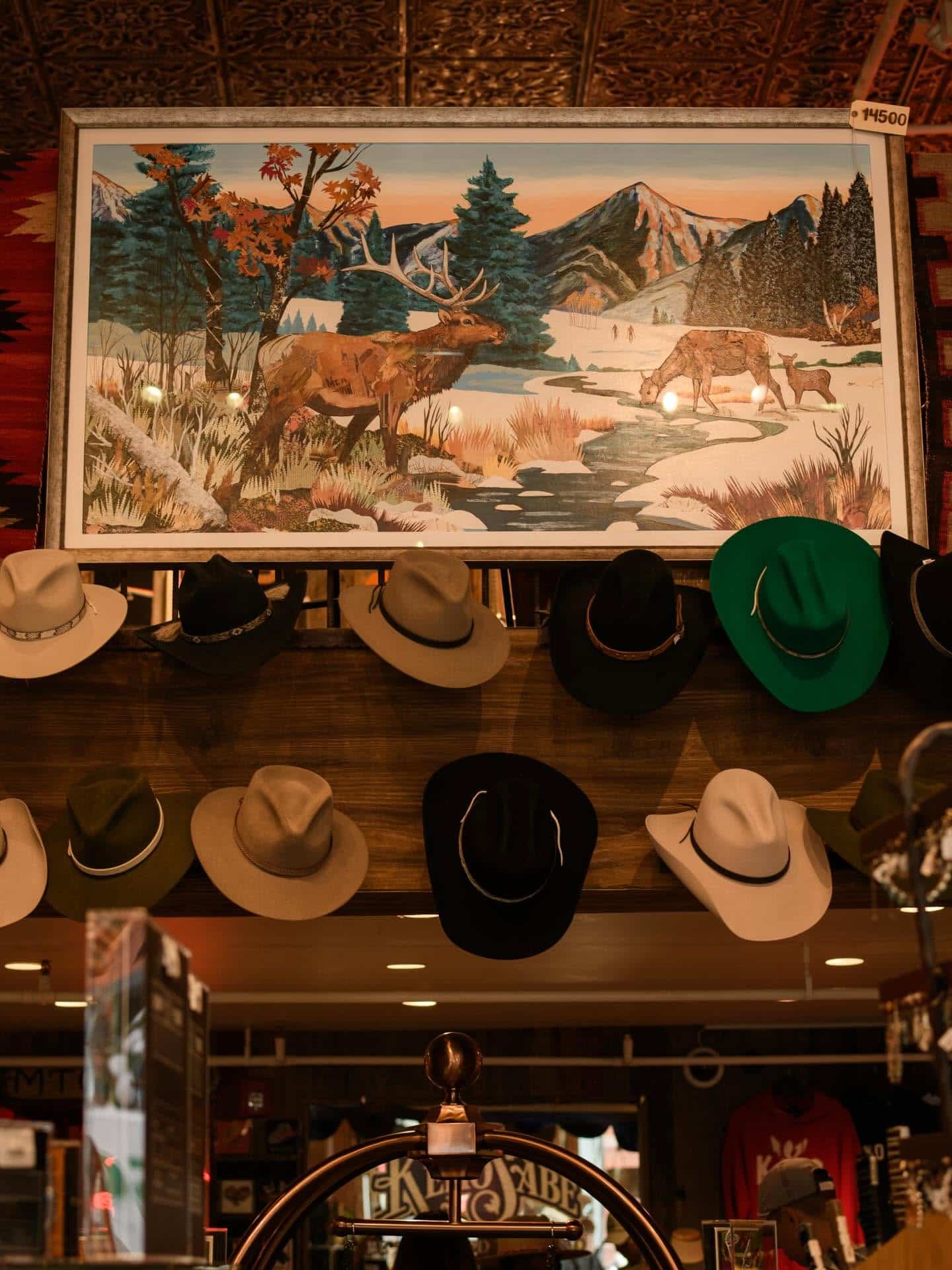
Kemo Sabe now occupies a singular position in this town. It is not a Western-wear store in any conventional sense: it is a cultural institution with a velvet rope, a tin-coffered upstairs bar pouring top-shelf tequila, and a hat-shaping ritual that takes around 45 minutes and draws celebrities who could shop anywhere. Jeff Bezos is a regular. Kevin Costner, William H. Macy, Orlando Bloom, and Rihanna have all worn pieces out the door. Hotel Jerome, Auberge Collection, outfits its entire staff in custom Kemo Sabe hats, with the hotel’s initials branded on the inside brim.
Kemo Sabe’s wranglers, the name it gives to its hat outfitters, hand-shape each piece alongside the client. Feathers, ribbon, vintage pins, and branding irons line an accessory bar stocked in dozens of materials and textures. A hat that fails quality control gets doused in True Grit tequila and set alight. What survives is, by definition, correct.
Wendy Kunkle, a former salesperson who became president with her brother, Bobby, in 2020, now leads the brand as it expands into Vail, Park City, Jackson Hole, and beyond. The flagship at 217 South Galena Street remains the original.
That upstairs bar functions as more than a hat-session amenity. Primarily reserved for private events, it opens to clients and friends by invitation, and the space carries its own character: turn-of-the-century saddles, a Remington in the holster, a Cheyenne ceremonial dress, and a bison mount the staff named Roosevelt. For a private gathering that wants something genuinely unlike a hotel ballroom, it is worth asking about directly.
Best for: Anyone who wants a one-of-a-kind wearable piece with a genuine origin story, plus an upstairs bar session while it takes shape.
Insider tip: Weekday mornings before 11:00 a.m. move at a calmer pace than the weekend floor. If you want the wrangler’s undivided attention rather than a shared session, come midweek.
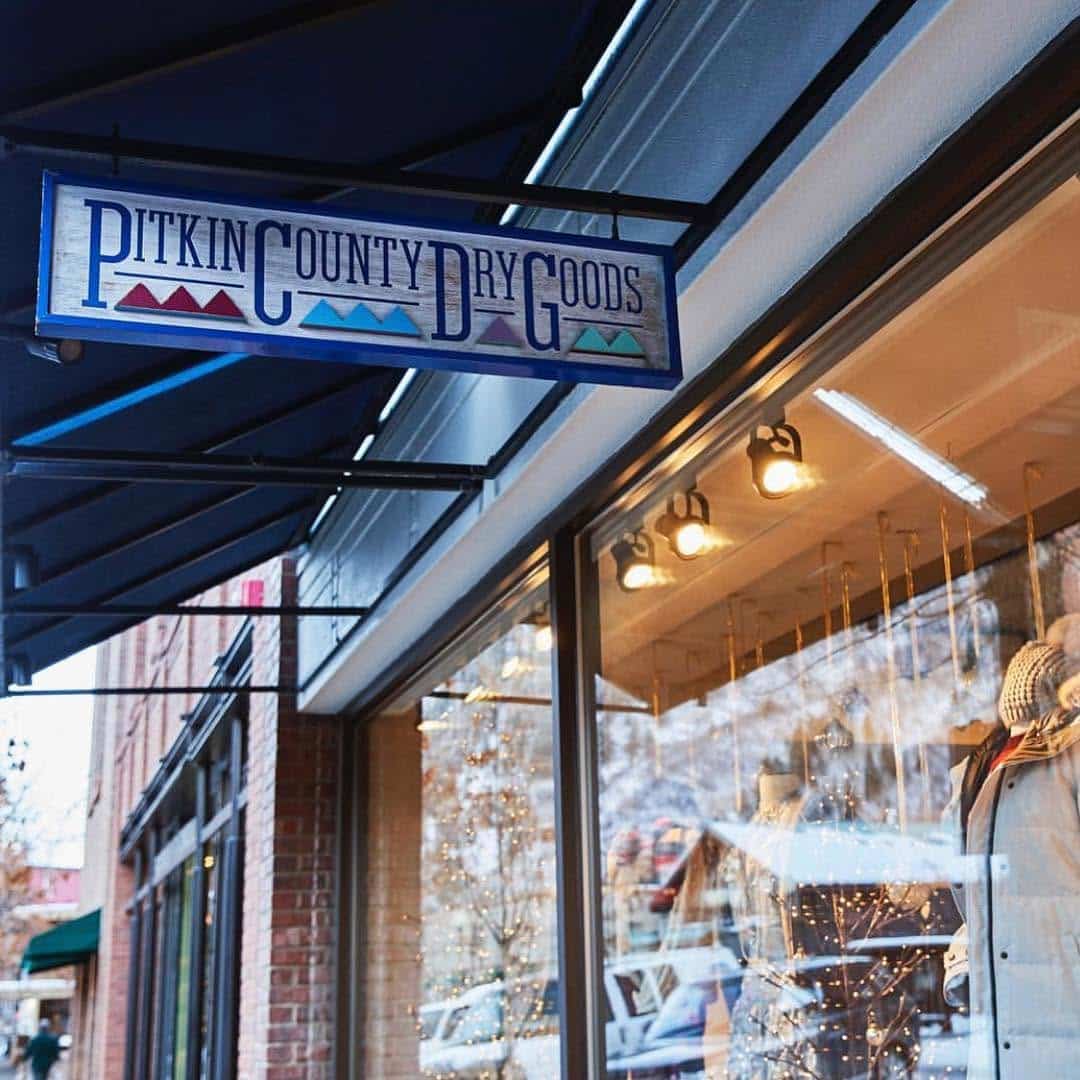
Aspen luxury shopping has a longer history here than anywhere else in town. Pitkin County Dry Goods opened on July 4th, 1969, before most of Aspen’s current luxury infrastructure existed, and has traded continuously ever since, earning the title of the town’s oldest clothing retailer. What the brand built over those five decades is not nostalgia. It is a live editorial point of view, revised and updated with every new season.
Right now, the curation reads like a well-considered wardrobe. Women’s labels include Isabel Marant, Simkhai, TWP, and Ulla Johnson. Men’s labels move from Auralee’s quietly luxurious Japanese tailoring to Bode’s antique-textile garments and Dries Van Noten‘s considered layering. Elevated accessories, sculptural jewelry, and handcrafted bags complete the offer. Denim is a particular strength: PCDG carries one of the broadest selections of brands in the valley, and it draws visitors specifically for that alone. The store sits at 520 East Cooper Avenue, directly opposite The Little Nell.
David Fleisher has run PCDG for 56 years, having joined his brother Don in 1970, fallen in love with the business, and eventually taken it over. Along the way, he met his wife, Gina, an Aspen native, when she came in one summer looking for a job. That thread still shows in the way the store operates today: regular hours are 11:00 a.m. to 6:30 p.m., seven days a week, but on powder mornings the doors open at 1:00 p.m. Nobody who has spent time in Aspen needs that explained. Mountain days come first, and the shopping will be there when the slopes are done.
Best for: Visitors looking for elevated wardrobe pieces with real editorial depth, not department-store volume.
Insider tip: The personal styling service is by phone appointment only. Contact the store to set one up before your trip if you prefer focused time with a team member over a solo browse.
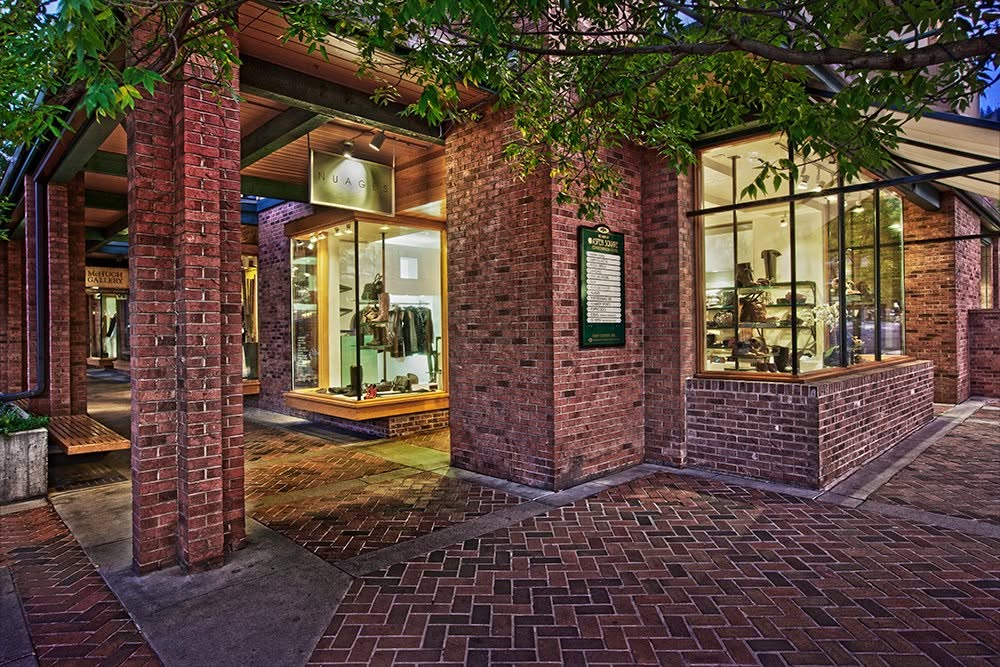
One block from the Aspen Mountain gondola in the Aspen Square Building, Nuages has operated since 1986 under the ownership of Mary Moyer. Physically, it is a compact space. In terms of edit depth and buyer intelligence, it punches far above its square footage.
Moyer built the store around a deliberately narrow selection: European and American ready-to-wear and accessories chosen for mountain living over breadth. Chrome Hearts leather and sterling sit alongside couture pieces from designers whose work rarely reaches mountain-town retail, including Alaïa shoes and handbags. The accessories floor carries Loquet London, a fine jewelry line built around customizable lockets: clients select the case, charms, and chain, with pieces crafted in solid gold and set with natural gemstones.
Among boutiques serving fashion-forward visitors, it holds a specific position: the owner-led store where the curation reflects a single, highly developed taste rather than any committee’s market research.
Best for: Clients who value one expert buyer’s perspective over a wide selection.
Insider tip: Moyer is often on the floor herself. Tell her what you have in mind and let her respond. That conversation will take you somewhere better than browsing alone.
At nearly 8,000 feet, recovery is not optional; it is part of the day. The altitude affects sleep, skin, and muscle performance in ways most first-time visitors underestimate, and Aspen’s two best wellness destinations approach that reality from different angles. One focuses on recovery and physical restoration after days spent in the mountains. The other combines movement, bodywork, and nutritional support for visitors who want to stay active while they are here.
The spa at The St. Regis has operated for more than a decade through several design iterations. The current version, recently reimagined by Rowland+Broughton Architecture and Interior Design, represents the most thorough transformation yet. At 14,000 square feet across 17 treatment rooms, it now references the original RAKxa retreat on Bang Krachao island in Thailand, with its philosophy anchored in the Thai concept of raksaa: to conserve, to guard, to cherish, to heal.
For anyone seeking an Aspen spa with genuine depth of treatment, the RAKxa menu delivers across several distinct categories. The 111Skin partnership brings Harley Street clinical-grade skincare into the treatment rooms: facials developed under the direction of Dr. Yannis Alexandrides that produce measurable results, not relaxation theater. Thai-inspired offerings include the RAKxa Sleep Well ritual, a rhythmic full-body massage, and the Hot Stone Chakra Massage, which combines heated stones with structured technique.
RAKxa also offers the Ballancer Pro, a lymphatic drainage suit that optimises lymphatic flow, reduces inflammation, and supports physical performance after days on the mountain. Book this when you reserve your treatment rather than on arrival, as availability is limited.
Amenities that come with any treatment: oxygen lounges with private oxygen access, cold plunges, hot tubs, steam rooms, and the signature Confluence waterfall feature on the lower level. Non-hotel guests who book a treatment gain access to all facilities. Worth noting for those who want to extend the afternoon: The St. Regis offers its traditional Afternoon Tea service in the Relaxation Lounge, with finger sandwiches, desserts, and freshly brewed tea. It serves as an après-ski alternative and requires 24 hours’ notice to arrange.
Best for: Post-ski recovery, clinical skincare, and visitors who want a serious wellness program, not a single relaxation hour.
Insider tip: The oxygen lounge is specifically useful for guests arriving from lower elevations. Fifteen minutes of supplemental oxygen before or after a treatment can measurably reduce altitude-adjustment discomfort, which matters more at nearly 8,000 feet than most first-time visitors anticipate. An evening treatment that extends past 8:00 p.m. leaves little margin for improvising onward movement to dinner.
Carrie Bellotti founded O2 Aspen in 2002 as an upscale yoga and Pilates studio. Over two decades, the operation expanded outward from that core: a spa menu with trained massage therapists and aestheticians, a lifestyle boutique carrying brands including The Upside, and eventually a second location in Dallas.
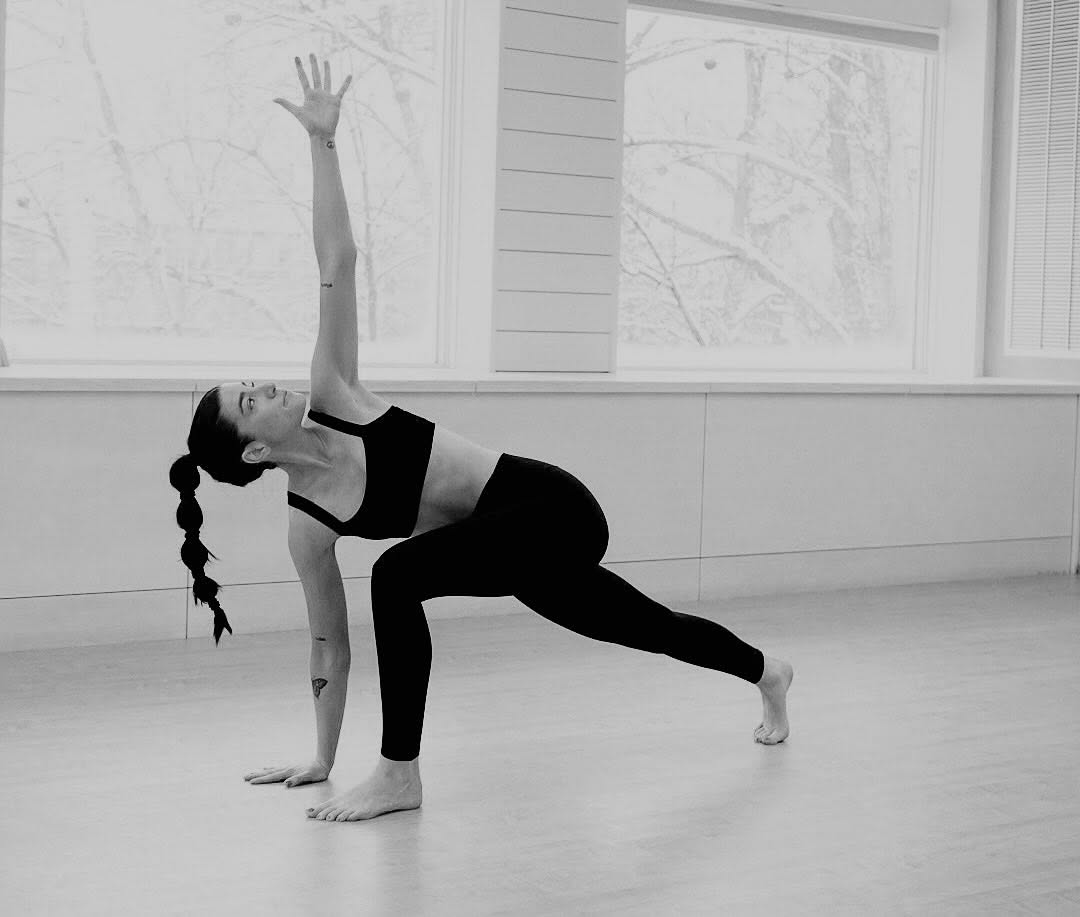
O2’s fitness programming covers the most complete boutique movement offering in town. Yoga Director and Yoga Therapist Evan Soroka oversees the class calendar, covering traditional yoga, aerial yoga, Pilates reformer, and personal training. The reformer setup is notably robust by Aspen standards. Visitors accustomed to high-end studios in larger cities find the equipment and instruction level consistent with what they left at home, which is rarely the case elsewhere in the mountains.
The Aspen Lift facial uses microcurrent technology to target muscles more deeply. Sports massage aligns directly to the active-recovery clientele the studio already attracts. Nutritional counseling rounds out the wellness offer, making O2 one of the few places that addresses training, treatment, and diet under one roof.
O2 sits in its own category among Aspen spa destinations: it is also a full-service movement studio, which means the morning’s workout and the afternoon’s treatment take place in the same building. For visitors who want to move during their time here, not only recovering from moving, that distinction matters.
Best for: Active visitors who prefer to train alongside their treatments, not just recover.
Insider tip: Private Pilates sessions fill up weeks in advance during peak season. Book before you travel, not once you land. If the morning runs a reformer session into a facial, allow for a pickup instead. Two hours of output, followed by treatment, is not the time to navigate downtown on foot.
All five businesses on this list sit within a ten-minute walk of each other. Retail stops are three to four minutes apart on foot, and the spas are no further. In practical terms, you can move from a hat fitting to a reformer class to a spa treatment and cover the ground between them in the time it takes to finish a coffee.
Retail sequences naturally through an afternoon. Wellness needs more thought. Both spas serve different moments in a day, not different types of visitors. One makes most sense after the mountain, when the legs are spent, and the body wants cold water and bodywork. The other works better earlier, when there is energy to put in before anything is taken out. Running both in sequence is possible; running them out of order wastes one of them.
For days that combine shopping, a treatment, and dinner, the proximity helps but does not solve everything. A 90-minute spa session that finishes at 8:00 p.m. ends two blocks from most dinner reservations, but after a long treatment, even a short walk can feel less appealing before dinner.